A homeowner opens their mortgage statement and sees a higher monthly payment. They haven’t moved. They haven’t refinanced. Their mortgage interest rate hasn’t changed.
What changed is the cost of keeping the home.
When homeowners pay property taxes and insurance through escrow, changes in those expenses affect the payment they send to their mortgage servicer. A fixed mortgage rate provides stability for principal and interest, but it doesn’t freeze the entire monthly payment.
For independent insurance agents, this creates an opportunity to help customers understand their costs, evaluate available choices and find potential savings within their insurance coverage.
The insurance increase has been substantial
Zillow’s October 2026 analysis, covered by Inman, found that homeowners insurance premiums increased 75% in Dallas and 69% in Houston over five years. Both markets exceeded the national increase of 54%.
Rice University’s Kinder Institute provides a longer view of the pressure across Texas. Between 2009 and 2024, the median annual premium across Texas counties increased 74% after adjusting for inflation, while median household income grew 11% on the same basis.
These findings describe different periods and measures: Zillow examines metro-level premium estimates, while Kinder analyzes county-level data. Together, they show how significantly insurance costs have risen.
A renewal increase becomes a household budget decision
Customers rarely experience an insurance renewal in isolation. They weigh it alongside their property taxes, groceries, utilities, transportation and other recurring expenses.
That context matters. Kinder estimated that 64% of Texas households could not afford a median-valued home in their county in 2024 without spending more than 30% of their income on housing. Its model found that a further 10% increase in homeowners insurance premiums would push approximately 49,900 additional households beyond that affordability threshold.
For a household already managing a tight budget, another $50 or $100 a month is meaningful. An agent who understands that pressure can have a more useful conversation about what the customer needs, what they can afford and which tradeoffs they are comfortable making.
Help customers understand what changed
The first step is to separate the components of the monthly payment.
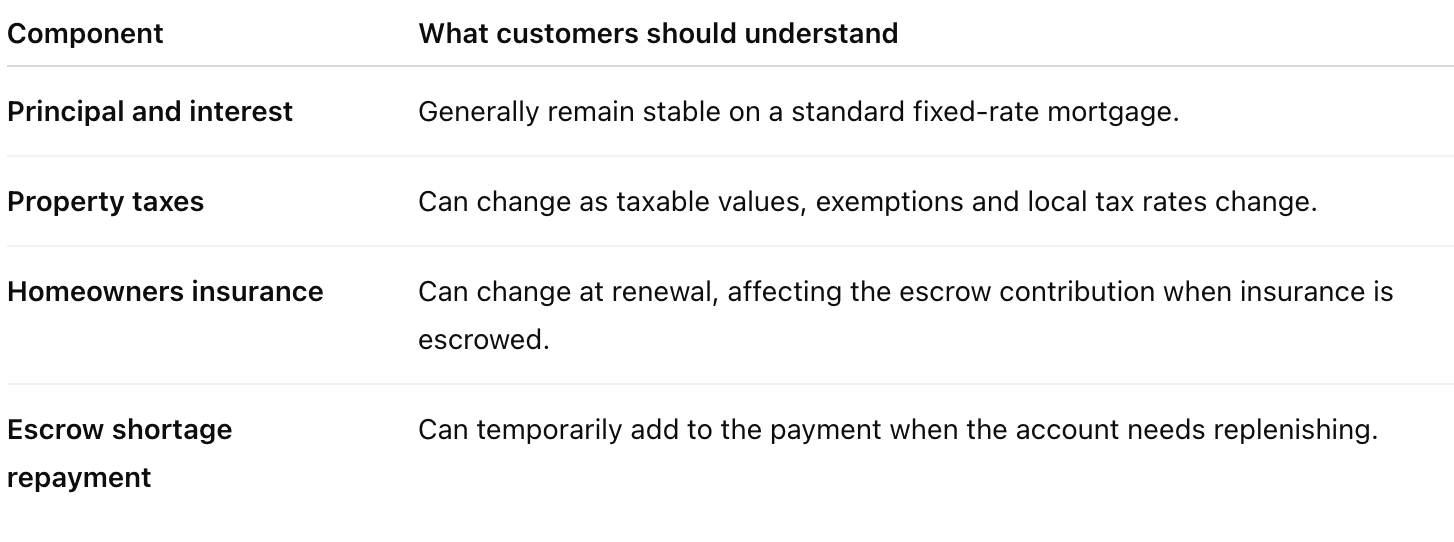
Mortgage insurance may also be included, depending on the loan. Customers should review their mortgage statement and direct questions about escrow calculations to their servicer.
An insurance agent can help customers identify the insurance portion of the change and understand what alternatives are available. That clarity gives the customer a practical starting point.
Why FairlyInsured built the Texas Property Tax Finder
FairlyInsured built the Texas Property Tax Finder to make local housing-cost information easier to understand.
The tool lets users explore estimated property-tax rates, typical home values, annual tax bills and monthly tax costs by Texas city and ZIP code. These estimates provide context; a homeowner’s actual bill depends on the specific property, exemptions and applicable taxing jurisdictions.
For independent agents, it offers a natural way to begin a broader affordability conversation:
“How much of your monthly housing budget goes toward taxes and insurance? Let’s look at those costs together, then review the insurance options available to you.”
Use the finder for local context, then use the customer’s actual tax bill, policy documents and mortgage statement to understand their situation.
Property-tax bills do not move uniformly across Texas. The value of the conversation is understanding the customer’s own costs and identifying where they have choices.
Insurance savings can create breathing room
Consider this illustrative household:
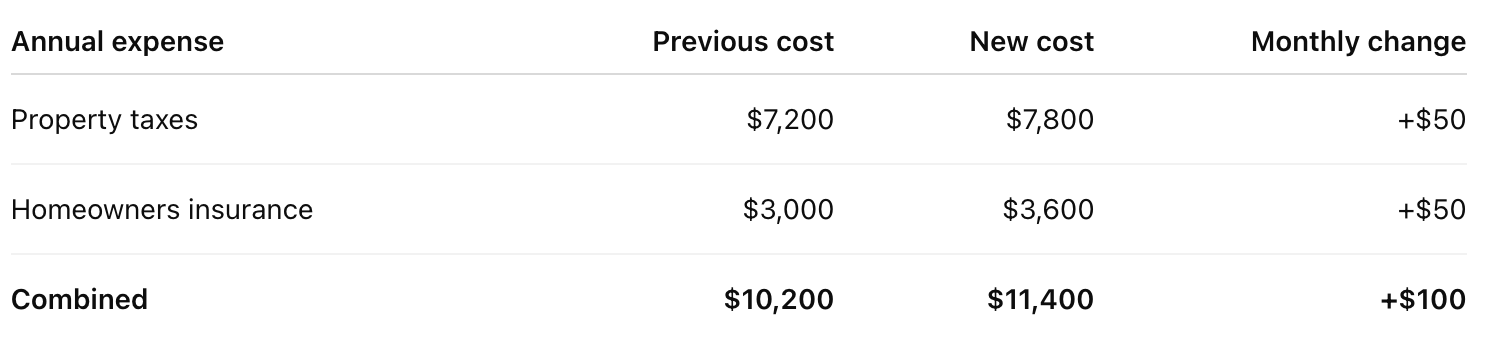
Illustrative figures, not Texas averages.
The household now needs an additional $1,200 a year.
If an agent identifies a suitable insurance alternative costing $600 less annually than the renewal offer, that saving would offset half of the combined increase. The property-tax bill remains the same, but the household gains $50 a month in breathing room.
Savings depend on the customer, property, available carriers and policy terms. The agent’s role is to make those choices and their consequences clear.
Make optionality concrete
“Let’s review your options” becomes valuable when customers can see what each choice means.
Compare available carriers. Show how alternative policies differ in premium, coverage limits, exclusions and claims settlement terms. A lower price deserves a clear explanation of what the customer receives.
Review discounts and bundling. Check for applicable discounts and compare the combined cost of home and auto coverage. Evaluate the household’s total insurance spend.
Explain deductibles in dollars. If a higher deductible reduces the premium, show the annual saving alongside the additional amount the customer would need after a covered loss.
Examine roof coverage carefully. Replacement cost, actual cash value, depreciation and roof-specific terms can materially affect what a policy pays.
These comparisons reflect Texas Department of Insurance guidance to evaluate coverage, deductibles and discounts alongside price.
Turn the renewal into a conversation about choices
Independent agents can bring a practical perspective to a difficult moment: explain the increase, understand its effect on the customer’s budget and present available alternatives with clear tradeoffs.
FairlyInsured’s Property Tax Finder helps open that conversation. The agent’s expertise makes it useful.
Start with the full housing-cost picture. Help customers understand where their money goes. Then show them where insurance choices may make a difference.
Explore the FairlyInsured Texas Property Tax Finder before your next customer conversation.
Sources: