The Right Way to File an Auto Insurance Claim in Texas — and the Mistakes That Cost You
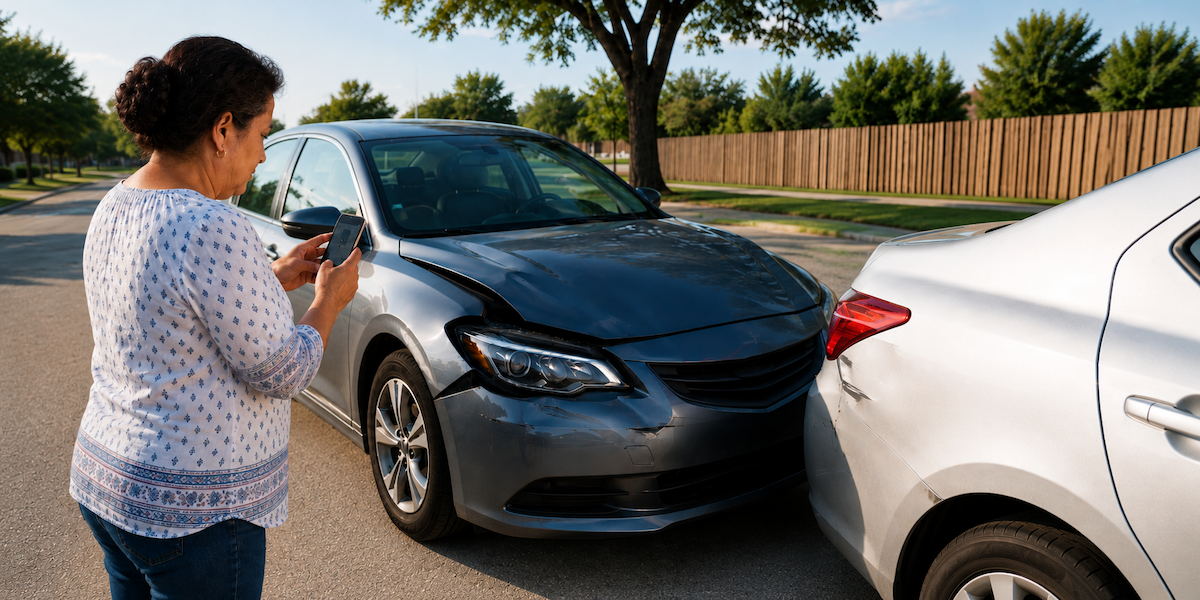
Filing an auto insurance claim feels straightforward until you're actually doing it — standing on the side of a Texas highway, adrenaline running, phone in hand, trying to figure out what to do next.
The decisions you make in the first hours after an accident shape how your claim resolves. Some of the most common mistakes happen before the tow truck arrives.
Here's what to do, in order, and what to avoid.
At the Scene
Make sure everyone is safe first.
Before anything else — documentation, photos, insurance cards — confirm that you and any other parties are safe and that medical attention is being sought for anyone who needs it.
In Texas, you're required to stop and remain at the scene of an accident involving injury, death, or property damage.
Call law enforcement.
For any accident involving injury, significant property damage, or a dispute about what happened, call 911 and get a police report filed.
A police report creates an official record of the incident, documents the other driver's information, and provides an objective account of the scene that your insurer will use.
In Texas, you're required to report accidents involving injury or death, and accidents involving property damage over $1,000.
Document everything before vehicles are moved.
Use your phone to photograph the scene from multiple angles — all vehicles involved, their positions relative to each other and to road markings, all visible damage to every vehicle, the surrounding area, road conditions, traffic signals and signage.
Photograph skid marks, debris, and anything else relevant to understanding what happened. Take more photos than you think you need.
You cannot go back later.
Get the other driver's information.
Name, contact information, driver's license number, license plate, insurance company name, and policy number.
In Texas, drivers are required to exchange this information after an accident.
Get witness information.
If anyone witnessed the accident, ask for their name and phone number. Witness accounts can be significant in disputed liability situations.
Don't admit fault.
Even if you believe you caused the accident, don't say so at the scene.
Fault determination is a legal and insurance process that happens after the fact with full information.
Statements made at the scene can be used against you.
Describe what happened factually if asked by law enforcement, but avoid statements that amount to accepting responsibility.
Notifying Your Insurer
Notify your insurer promptly.
Most Texas auto policies require you to report accidents promptly and cooperate with the claims process.
Waiting days or weeks to report an accident — or not reporting it at all — can jeopardize your coverage.
Call your insurer the same day if possible.
You don't need to have all the information sorted out.
You need to start the process.
Your insurer will assign a claims adjuster and begin the process of gathering information and assessing the damage.
Be accurate and complete.
When you describe the accident to your insurer, be accurate.
Inconsistencies between what you tell your insurer and what the police report, witness statements, or photos show can create complications in your claim.
You don't need to speculate about fault or causation — describe what you observed factually.
The Claims Process
Understand what your insurer is doing.
After you report a claim, your insurer assigns an adjuster who investigates the accident, assesses liability, evaluates the damage to your vehicle, and determines what your policy covers. This process takes time — from days to weeks, depending on the complexity of the claim.
Get multiple repair estimates if possible.
Your insurer may direct you to a preferred repair shop or send their own appraiser to assess damage.
You typically have the right to choose your own repair facility in Texas, though using an insurer's preferred network may streamline the process.
Getting an independent estimate gives you a baseline to compare against the insurer's assessment.
Understand your rental car coverage.
If your policy includes rental reimbursement coverage, it typically activates while your vehicle is being repaired after a covered claim.
Know your daily limit and the maximum number of days covered — these vary by policy and matter when repairs take longer than expected.
Ask about OEM vs. aftermarket parts.
For newer vehicles, this matters.
Original equipment manufacturer parts maintain your vehicle's original specifications.
Some insurers default to aftermarket or recycled parts in repair estimates.
Know your policy's position on this and advocate for OEM parts if it matters for your vehicle.
The Mistakes That Cost People
Waiting too long to seek medical attention. If you're injured in an accident, see a doctor promptly — even if you feel okay immediately afterward.
Adrenaline masks pain.
Symptoms from whiplash, soft tissue injuries, and other accident-related conditions can appear or worsen in the days following an accident.
Delayed medical treatment creates both a health risk and a documentation gap that can complicate an injury claim.
Giving a recorded statement to the other driver's insurer without preparation.
The other driver's insurer may contact you and request a recorded statement.
You are not required to give one.
Before providing any recorded statement to another party's insurer, understand what you're agreeing to and consider consulting an attorney if injuries are involved.
Accepting the first settlement offer without reviewing it.
On total loss claims, especially, the first offer from your insurer may undervalue your vehicle.
You have the right to negotiate.
Provide documentation — comparable vehicle listings, vehicle history, condition records — to support a higher value if you believe the initial assessment is low.
Not understanding diminished value.
In Texas, if your vehicle is repaired after an at-fault accident caused by another driver, the vehicle's market value is typically lower than it was before the accident — even after perfect repairs.
This loss in value is called diminished value, and in Texas you may have the right to recover it from the at-fault driver's insurer.
This is separate from repair costs and is not automatically included in a settlement.
Settling an injury claim too quickly.
Once you sign a settlement release on a bodily injury claim, you typically cannot reopen it, regardless of how your condition develops.
Don't settle an injury claim before you understand the full extent of your injuries and their long-term implications.
For significant injuries, consulting a personal injury attorney before signing anything is worth the time.
Assuming your claim is being handled correctly without staying engaged.
Insurance claims are not passive processes for the policyholder.
Stay in contact with your adjuster.
Understand where your claim stands.
Ask questions when you don't understand something.
Document every conversation with the date, time, and what was discussed.
When to Consider Getting an Attorney
For claims involving significant injuries, disputed liability, or a settlement offer that doesn't reflect the true cost of your damages, consulting a personal injury attorney is worth considering.
Personal injury attorneys in Texas typically work on contingency — no upfront fee, with payment coming from a percentage of the settlement or judgment.
An initial consultation is usually free.
For serious claims, having representation ensures that the full value of your damages — medical expenses, lost wages, pain and suffering, diminished earning capacity — is being pursued.
This isn't necessary for routine property damage claims. It becomes more relevant when injuries are serious, when liability is disputed, or when an insurer's settlement offer doesn't feel like it reflects what actually happened.
A Final Thought
Most auto insurance claims resolve without drama.
The process works, vehicles get repaired, and life continues.
But the claims that don't resolve smoothly — where mistakes made at the scene or in the first days afterward create complications — are almost always the ones where the policyholder didn't know what to do until they were already in the middle of it.
Knowing the process before you need it is one of the more practical things a Texas driver can do.
For educational purposes only. Consult a licensed Texas insurance agent or attorney for guidance specific to your situation.
Find out exactly what you're missing.
The free 4-minute checkup identifies your gaps and matches you with a local independent advisor.
Free Coverage Review →