What Happens to Your Home Insurance After a Major Weather Event in Texas

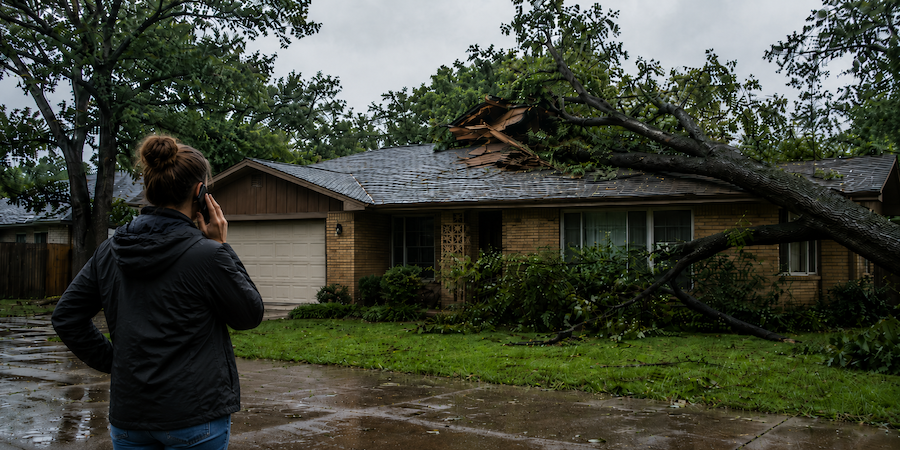
Texas weather generates homeowners insurance claims at a scale that few other states experience. Hailstorms, hurricanes, tornadoes, freeze events, and flooding collectively produce billions of dollars in homeowners losses across the state every year. For homeowners who haven't been through a major claim before, the process that follows a significant weather event can be disorienting.
Here's what actually happens after you file — and what you can do to protect your interests through the process.
Immediately After the Event
The first actions in the hours and days following a significant weather event set the stage for how your claim resolves.
Document the damage before anything is touched. Before any cleanup, temporary repairs, or contractor visits, photograph and video the damage thoroughly. Every room affected. Every damaged surface. The roof from whatever vantage point is safe. The exterior of the home. The contents that were damaged. This documentation is your evidence — and once cleanup begins, some of it is gone.
Make necessary emergency repairs to prevent further damage. Your homeowners policy requires you to take reasonable steps to prevent additional damage after a covered loss. A tarp over a damaged roof section, boarding up broken windows, or pumping water from a flooded area are the kinds of emergency measures that are appropriate and generally reimbursable. Keep receipts for everything.
Report the claim promptly. Contact your insurer or agent as soon as possible after documenting the damage. Most policies have notice requirements — you're required to report claims promptly. Delays in reporting can complicate the claim.
The Adjuster Process
After you file, your insurer assigns an adjuster to evaluate the damage. After a major weather event affecting a large area of Texas, adjuster availability can be strained — demand following a significant hailstorm or hurricane can mean waiting days or weeks for an appointment.
Your insurer's adjuster works for your insurer.
This isn't a criticism — it's simply context for how to approach the process. The adjuster's assessment of your damage and their estimate of the repair cost is your insurer's position, not a neutral finding.
You have the right to a public adjuster. A public adjuster works for you — they assess your damage and advocate for a higher settlement. Public adjusters typically charge a percentage of your claim settlement — 10% is common. For large claims where the insurer's initial estimate seems significantly low, a public adjuster's fee can be offset by the higher settlement they negotiate.
Get independent contractor estimates. Regardless of whether you use a public adjuster, getting estimates from licensed Texas contractors gives you an independent assessment of what repairs actually cost. If your insurer's estimate is significantly below what contractors are quoting for the same scope of work, you have specific grounds to negotiate.
The Settlement Offer
When the adjuster completes their assessment, your insurer produces a settlement offer — what they're willing to pay for the covered damages, minus your deductible.
Review it carefully before accepting. The settlement offer is a starting position. You're not required to accept it, and many initial offers in large weather events are negotiated upward with documentation.
Understand what's included and what isn't. The adjuster's estimate should itemize the scope of work they're paying for. If areas of damage are missing from the estimate, point them out specifically with documentation.
Omissions from the initial estimate are common — not always intentional, but worth catching before you accept the settlement.
Understand replacement cost vs. actual cash value. If your policy pays replacement cost on your dwelling, the settlement process may involve two payments — an initial ACV payment and a second payment for recoverable depreciation after repairs are complete. Know which you have and how the two-payment process works before you accept the first check.
If You Disagree With the Settlement
If your insurer's settlement offer doesn't reflect what you believe the covered damages are worth, you have specific options.
Negotiate directly with documentation. A written counter-offer backed by contractor estimates, photos, and specific identification of what was missed is more effective than a general complaint about the settlement being too low.
Invoke the appraisal process. Most Texas homeowners policies include an appraisal clause that allows you and your insurer to each hire an independent appraiser when you disagree on the value of a claim. The two appraisers attempt to agree on a value; if they can't, they select a neutral umpire. The umpire's decision is binding. This process is underused by homeowners who don't know it exists.
File a complaint with the Texas Department of Insurance. If you believe your insurer is acting in bad faith — unreasonably delaying your claim, denying a covered loss without a reasonable basis, or otherwise not complying with Texas insurance law — you can file a complaint with the TDI. Texas has specific prompt payment laws that govern how quickly insurers must acknowledge, investigate, and pay claims.
Consult a public adjuster or attorney. For significant claims where you believe you're being substantially underpaid, a public adjuster or a property insurance attorney can provide expertise and advocacy that changes the outcome.
How Claims Affect Your Future Coverage
Filing a homeowners insurance claim in Texas has real implications for your future coverage and premium — information worth understanding before you decide whether to file.
Claims appear on your CLUE report — a database insurers use when underwriting new policies. Multiple claims within a short period can trigger non-renewal, limit your carrier options, or result in higher premiums at renewal.
For small claims modestly above your deductible, the calculus of whether to file deserves honest consideration. A $3,000 claim with a $1,000 deductible nets you $2,000 in coverage — but may cost you more than that over several years in premium increases.
For large claims, file without hesitation. The purpose of insurance is to cover significant losses you couldn't comfortably absorb yourself.
For educational purposes only. Consult a licensed Texas insurance agent for guidance specific to your situation.
Find out exactly what you're missing.
The free 4-minute checkup identifies your gaps and matches you with a local independent advisor.
Free Coverage Review →