What Texas Homeowners Need to Know Before Hurricane Season
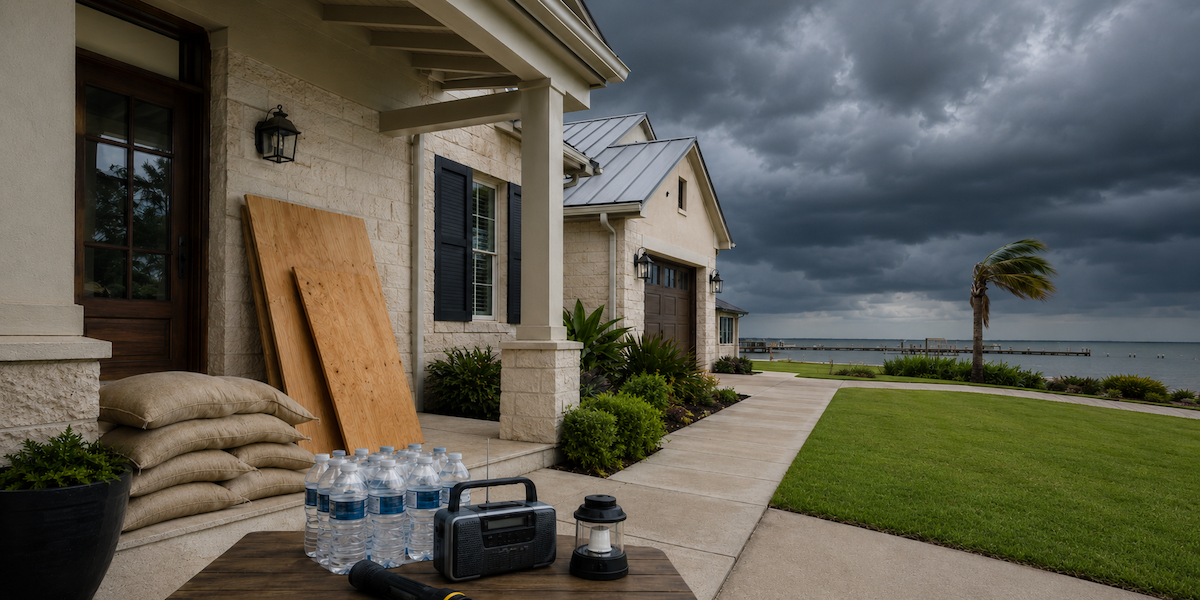
Every year, the same thing happens. A tropical system develops in the Gulf of Mexico, strengthens faster than expected, and Texas homeowners who haven't thought about their coverage since last renewal suddenly have urgent questions about what their policy covers.
By the time those questions become urgent, it's too late to change the answers.
Here's what to know and do before hurricane season arrives.
The 30-Day Waiting Period Problem
The most important thing to understand about hurricane season and home insurance is this: you cannot buy or change coverage after a storm is named and headed toward Texas.
Most homeowners insurance carriers impose a binding restriction when a named storm enters the Gulf — meaning no new policies, no coverage increases, and no changes to existing policies until the storm passes. Some carriers implement these restrictions even earlier, when a tropical system achieves tropical storm status.
The 30-day waiting period for flood insurance through the National Flood Insurance Program makes this even more acute. If you don't have flood insurance today and a storm is approaching, you cannot get coverage in time. The waiting period exists specifically to prevent people from buying coverage only when a storm is imminent.
The practical implication: every coverage decision that matters for hurricane season needs to be made months before the season peaks — not when the forecast models are showing a cone pointed at Texas.
What Your Homeowners Policy Covers — and Doesn't
Standard homeowners insurance covers wind damage from a hurricane — with important caveats.
Wind damage is typically covered. A hurricane's winds that damage your roof, break windows, or blow off siding are generally covered under a standard homeowners policy as a windstorm peril. However, in coastal counties designated as high-risk windstorm areas, most standard carriers exclude wind damage from base coverage. In those areas, wind coverage comes from the Texas Windstorm Insurance Association — a separate policy.
Your wind/hail deductible is separate and percentage-based. Most Texas homeowners policies have a separate wind and hail deductible expressed as a percentage of your dwelling coverage — not a flat dollar amount. On a $350,000 home with a 2% wind/hail deductible, your out-of-pocket cost on any wind or hail claim is $7,000 before coverage applies. Many homeowners don't know this number until they file a claim.
Storm surge and flooding are not covered. This is the most significant coverage gap in hurricane situations. Water that rises from outside — storm surge, rising rivers, overland flooding — is explicitly excluded from standard homeowners policies. It's a flood claim, not a windstorm claim, and it requires separate flood insurance. After major hurricane events in Texas, the most financially devastating losses have been flood-related — and the homeowners who suffered those losses without flood insurance had no coverage mechanism for them.
The TWIA Question for Coastal Homeowners
If you live in one of the designated catastrophe areas along the Texas Gulf Coast — a first tier of counties from the Louisiana border through Corpus Christi and down to the Rio Grande Valley — wind coverage from the private market is largely unavailable. Your homeowners policy almost certainly excludes windstorm damage.
Coverage for wind and hail in these areas comes from the Texas Windstorm Insurance Association, a state-created insurer of last resort for coastal properties. If you live in a TWIA-eligible area and don't have a TWIA policy, you have no wind coverage for a hurricane.
TWIA policies must be purchased through licensed agents and have their own coverage limits and terms. Confirming that your TWIA policy is current and adequate — before hurricane season, not during it — is one of the most important insurance actions a coastal Texas homeowner can take.
Flood Insurance: The Gap That Hurts Most
After every major hurricane that affects Texas, the most painful coverage gap is flood. Harvey flooded an estimated 75% of homes in the Houston area that were outside FEMA's designated high-risk flood zone. Most of those homes had no flood insurance because they weren't required to carry it.
The lesson from Harvey — and from every significant flood event since — is that flood zone designation doesn't define flood risk accurately. Texas geography, development patterns, and weather systems create flood exposure that extends well beyond the areas FEMA maps identify as high-risk.
If you don't have flood insurance and you're within reasonable distance of any waterway, in a low-lying area, or anywhere that has experienced flooding in the past, the period before hurricane season is the moment to address this gap. The 30-day NFIP waiting period means a policy purchased today is active before the peak of hurricane season.
Additional Living Expenses: The Coverage You'll Need If You're Displaced
If a hurricane damages your home enough that you can't live in it during repairs, your homeowners policy's additional living expenses coverage pays for temporary housing — a hotel, a rental, extended stay — while repairs are underway.
Know your ALE limit before hurricane season. ALE coverage is typically 20% to 30% of your dwelling coverage on standard policies. On a $350,000 home, that's $70,000 to $105,000 — which sounds substantial until you're in a market where every rental property within 50 miles is occupied by other displaced homeowners and hotel rates have tripled because of demand following a major storm.
Know your limit. Know how long it applies. And understand whether your policy reimburses you for expenses after the fact or pays directly to service providers.
The Pre-Storm Checklist
Before hurricane season peaks — ideally by May or June — work through these items.
Confirm your homeowners policy covers wind damage, or confirm your TWIA policy is current if you're in a designated coastal area. Know your wind/hail deductible in dollar terms, not percentage terms.
Verify whether you have flood insurance and whether the coverage amount reflects your home's current value.
Check your additional living expenses limit. Document your personal property with photos or video stored off-site or in the cloud. Locate your policy documents and your insurer's claims phone number — have them accessible somewhere other than inside your home.
None of these take more than an hour combined. All of them matter significantly if a hurricane affects your area.
For educational purposes only. Consult a licensed Texas insurance agent for guidance specific to your situation.
Find out exactly what you're missing.
The free 4-minute checkup identifies your gaps and matches you with a local independent advisor.
Free Coverage Review →