A Tree Fell on My House and Insurance Says It's Not Covered. What Do I Do?
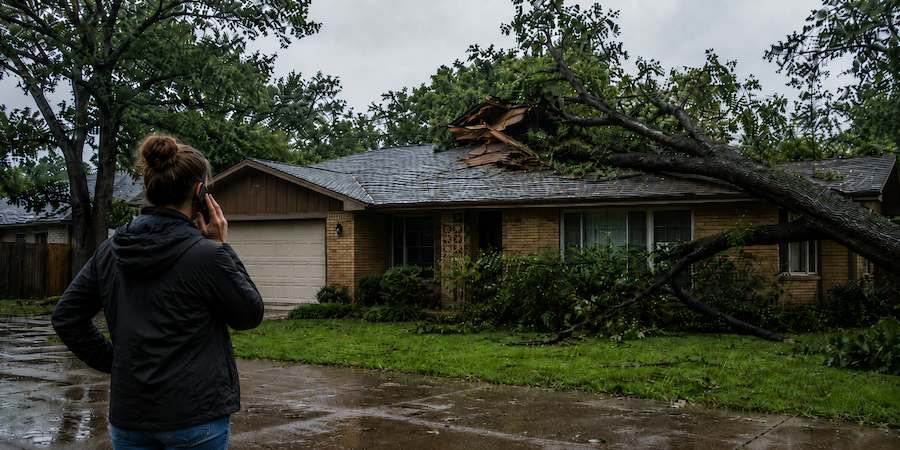
A tree falls on your house during a storm. You file a claim with your homeowners insurance. And then your insurer tells you it's not covered.
That outcome feels impossible — but it happens more often than most homeowners realize, and it happens for reasons that are worth understanding. More importantly, a denial is not always the end of the road. Here's how to think through the situation and what your options actually are.
Why Tree Fall Claims Get Denied
Before assuming the denial is wrong — or right — it helps to understand the most common reasons insurers deny tree fall claims. The reason matters because it determines what you can do about it.
The damage was caused by a non-covered peril. Standard homeowners policies cover tree falls caused by wind, lightning, hail, ice, and snow weight — all of which are named perils in most policies. However, if the tree fell due to rot, disease, or deterioration — conditions the insurer can argue made the fall foreseeable and preventable — coverage may be denied on the grounds that it wasn't a sudden and accidental event.
The tree was already dead or visibly diseased. If the insurer can establish that the tree was dead, diseased, or visibly compromised before the storm — and that you knew or reasonably should have known — they may argue the loss was preventable. This is one of the most commonly disputed grounds for denial in tree fall claims.
A building code or ordinance issue. This is one of the most significant and least understood denial reasons. When a home sustains significant damage and repairs require bringing the structure up to current building code — particularly in older homes — the cost of those code upgrades is often excluded from standard homeowners coverage. The insurer pays to restore what was there. They don't pay for upgrades that weren't there before. This is the specific gap that ordinance or law coverage addresses — and if you don't have it, the code upgrade cost falls on you.
The claim involves mold or secondary damage. If time passed between the tree fall and the claim, or between the claim and remediation, secondary damage — mold, further structural deterioration, weather intrusion — may be disputed as separate from the original covered event.
Policy exclusions. Some policies have specific exclusions that apply to tree falls in certain circumstances — if the tree was on a neighbor's property, if the tree was previously identified as a hazard, or other specific situations that vary by policy.
The Building Code Issue: What's Actually Happening
The building code denial deserves specific attention because it's the most common source of confusion in significant claims on older homes.
When a home built in the 1970s or 1980s sustains major damage, local building departments typically require that repairs bring affected areas up to current code. That means upgraded electrical wiring, modern insulation standards, updated plumbing, or structural modifications that the original construction didn't include.
Your insurer's obligation is generally to restore your home to its pre-loss condition — not to upgrade it. If restoring the damaged areas to pre-loss condition isn't sufficient to satisfy the building department's code requirements, the additional cost of those upgrades falls in a gap that standard homeowners policies don't cover.
This is the specific problem that ordinance or law coverage — also called building code coverage — exists to solve. It pays for the additional cost of bringing a repaired structure up to current code after a covered loss.
If your policy includes ordinance or law coverage, those upgrade costs should be covered up to your coverage limit. If your policy doesn't include it — or if the limit isn't adequate — the upgrade cost gap is real and the insurer's position may be technically correct even if it feels deeply unfair.
The critical question to answer: does your policy include ordinance or law coverage, and if so, what is the limit?
Separating the Tree Fall Claim From the Code Upgrade Issue
This is an important distinction that homeowners in this situation often miss.
A blanket denial of the entire claim because code upgrades are required may not be the correct insurer position. The appropriate response from the insurer is to cover the tree fall damage that falls within the policy's coverage — and to exclude only the portion of the repair cost attributable to code upgrades that aren't covered under the standard policy.
If your insurer is denying the entire claim — including the structural damage from the tree fall itself — rather than specifically excluding the code upgrade costs, that denial may be broader than the policy language supports. A tree fall during a snow or ice storm is typically a covered peril. The tree fall damage itself should be covered. The code upgrade cost is a separate question.
Getting clarity on exactly what the insurer is denying and why — in writing — is an essential first step.
What to Do When Your Claim Is Denied
Get the denial in writing with the specific reason.
If you haven't already, request a written denial letter that states the specific policy provision or exclusion the insurer is relying on. Verbal denials and vague references to coverage issues aren't sufficient. The specific language matters because it tells you whether the denial is well-founded or whether it's broader than the policy supports.
Read your policy specifically for the relevant provisions.
Pull out your declarations page and your full policy. Look specifically for:
The covered perils section — confirm that falling objects or trees, and ice/snow/wind events are listed.
The exclusions section — look for any exclusions that the insurer might be relying on.
The ordinance or law coverage section — determine whether you have it and at what limit.
The conditions section — look for any maintenance or care requirements that might affect coverage.
If the policy language is unclear or difficult to interpret, that ambiguity is itself relevant — courts generally interpret policy ambiguity in favor of the policyholder.
Request a re-inspection or second adjuster assessment.
If the denial is based on the adjuster's assessment of the damage or its cause — for example, a claim that the tree was already dead — you can request a second assessment. You can also hire a public adjuster or an independent contractor to provide their own assessment of the damage and its cause.
File a complaint with your state's insurance regulatory authority.
Every state has an insurance department that regulates insurer conduct and handles policyholder complaints. Filing a formal complaint puts your situation on record and requires the insurer to respond formally. Insurance departments investigate bad faith claim handling — and an insurer that is denying a claim more broadly than the policy language supports may be engaging in conduct the regulator wants to know about.
Consider a public adjuster.
A public adjuster is a licensed professional who represents policyholders — not insurers — in claim disputes. They assess your damage, review your policy, and advocate for a settlement that reflects what the policy actually provides. Public adjusters typically charge a percentage of the settlement — often 10% — but for a denied claim involving significant damage, their fee can be offset by the settlement they help recover.
Consider legal counsel.
For a significant claim involving a denial you believe is improper, consulting a property insurance attorney is worth serious consideration. Many property insurance attorneys offer free initial consultations. They can review your policy, the denial letter, and your specific situation and give you an informed opinion on whether the denial is supportable.
In most states, including Texas, insurers have a duty of good faith in handling claims. A bad faith denial — one that isn't supported by the policy language or that misrepresents what the policy covers — can give rise to claims beyond the original coverage amount, including attorney fees and in some cases additional damages.
If the denial involves a significant amount of money and you believe the insurer's position is wrong, an attorney's assessment is a worthwhile investment before accepting the denial as final.
The Additional Living Expenses Situation
If your home is uninhabitable and you're staying in an Airbnb or other temporary housing, your homeowners policy's additional living expenses coverage should be paying for that — if the underlying loss is covered.
The ALE coverage question is tied to the underlying claim. If the insurer is denying the tree fall claim entirely, they may also be refusing to pay ALE — which means you're bearing both the temporary housing cost and the underlying repair cost.
This is another reason the denial question matters urgently. ALE costs accumulate daily. The longer the dispute continues, the more temporary housing costs you're absorbing.
If you believe the denial is wrong, making that argument quickly — through a public adjuster, a complaint to the insurance department, or legal counsel — limits the ALE exposure you're absorbing while the dispute is unresolved.
What to Say to Your Insurer
When communicating with your insurer about a denied claim, a few principles help.
Put everything in writing. Follow up phone conversations with an email summarizing what was discussed and agreed to. Written records matter if the dispute escalates.
Ask specific questions. What specific policy provision or exclusion is the basis for the denial? What portion of the damage is being denied versus accepted? What would need to be true for coverage to apply?
Don't accept the denial as final without understanding it. A denial is the insurer's position — not an irreversible legal determination. You have the right to dispute it.
Don't make permanent repairs before the claim is resolved. Completing repairs before the insurer has had the opportunity to properly inspect can complicate the claim. Emergency repairs to prevent further damage are appropriate and should be documented. Permanent reconstruction should wait until the coverage question is resolved.
A Note on Older Homes Specifically
Homes built in the 1970s, 1980s, and earlier are specifically vulnerable to the code upgrade gap. Building codes have changed significantly over the past 40 to 50 years — electrical standards, plumbing requirements, insulation specifications, structural requirements, and fire safety codes have all been updated substantially.
When a significant portion of a 1970s home needs to be rebuilt, the cost of bringing that portion up to current code can be substantial — sometimes representing 20% to 40% of the total repair cost or more.
This is not a hypothetical or unusual situation. It's a predictable consequence of owning an older home that sustains significant damage. The financial gap it creates is the specific reason ordinance or law coverage exists — and the reason that owners of older homes should specifically verify whether they have it and at what limit.
If you have ordinance or law coverage and the insurer is denying the code upgrade costs anyway, that denial deserves specific challenge with the insurer, a complaint to the regulatory authority, or legal review.
Getting a Lawyer: When It Makes Sense
A property insurance attorney makes sense when:
The amount at stake is significant. Attorney involvement is most justified when the denied claim involves tens of thousands of dollars or more.
You believe the denial is wrong. If the policy language supports coverage and the insurer is denying it anyway, legal counsel can make that argument more effectively than a policyholder alone.
The insurer isn't responding to your disputes. An attorney's letter often produces a different response than a policyholder's complaint.
You're being asked to accept a settlement you believe is inadequate. An attorney can evaluate whether the settlement reflects what the policy actually provides.
Most property insurance attorneys work on contingency for bad faith claims — meaning they take a percentage of the recovery rather than charging upfront fees. For a significant denied claim, the financial barrier to consulting an attorney is lower than most homeowners assume.
A Final Thought
A tree falling on your home during a storm is one of the clearest possible examples of what homeowners insurance exists for. A denial in that situation is disorienting and often genuinely wrong — at least in part.
The denial may be entirely wrong and worth challenging in full. It may be partially wrong — covering the tree fall damage but legitimately excluding the code upgrade costs. Or it may be technically correct if the policy lacks ordinance or law coverage and the code upgrades represent the bulk of the repair cost.
Understanding which situation you're actually in — by reading the policy, getting the denial in writing, and if necessary consulting a professional — is the essential first step before deciding how to respond.
The worst outcome is accepting a denial without understanding whether it's correct. The best outcome is getting the coverage you paid for — and knowing how to pursue it.
For educational purposes only. This article does not constitute legal or insurance advice. If you have a denied insurance claim, consult a licensed insurance professional and consider speaking with a property insurance attorney for guidance specific to your situation.
Find out exactly what you're missing.
The free 4-minute checkup identifies your gaps and matches you with a local independent advisor.
Free Coverage Review →