Condo Insurance in Texas: What Your HOA Covers and What It Doesn't
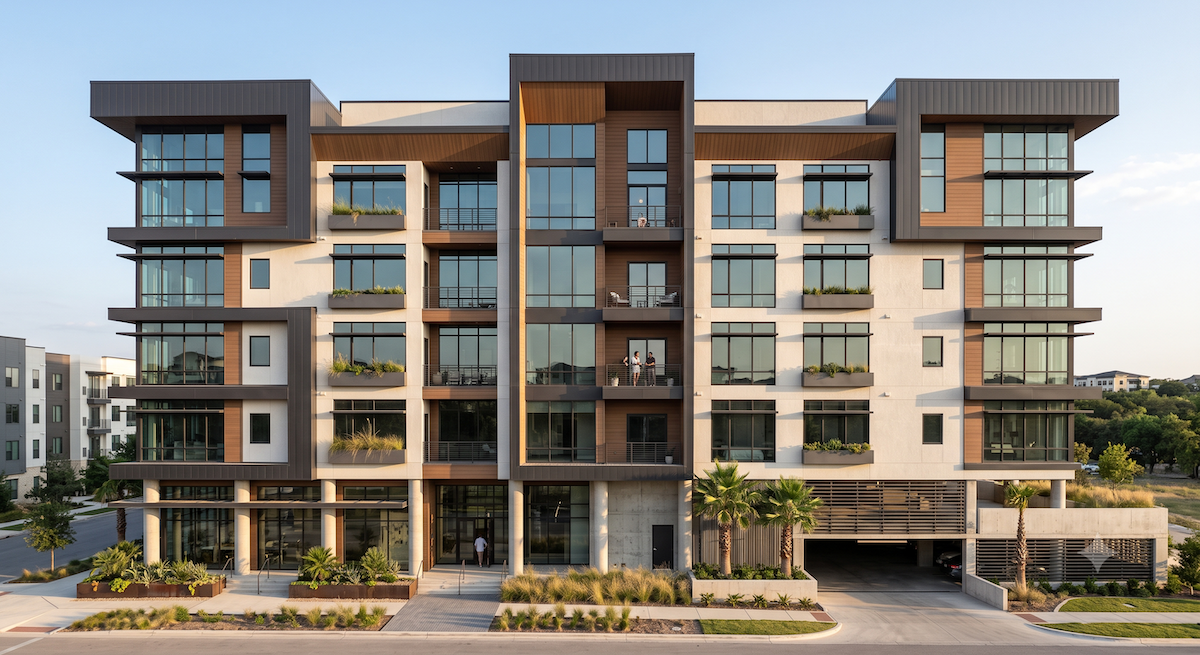
Condo insurance in Texas is genuinely different from homeowners insurance — and the difference trips up more condo owners than almost any other coverage misunderstanding in the market.
The core issue: a condo comes with two layers of insurance that need to work together. The HOA's master policy covers the building and common areas. Your individual condo policy covers everything else. The question of where one ends and the other begins isn't always obvious — and the answer varies depending on your specific HOA's master policy.
What the HOA Master Policy Covers
Every Texas condo association is required to maintain a master insurance policy that covers the building's common elements — the exterior structure, roof, hallways, lobbies, elevators, shared amenities, and other common areas.
Beyond that baseline, HOA master policies vary significantly in scope. The two most common structures are:
Bare walls-in (or studs-in). The master policy covers the structure of the building up to the bare walls of each unit — the drywall, the framing, the pipes within the walls. Everything inside the unit — fixtures, flooring, cabinets, appliances, and any improvements — is your responsibility.
All-in (or all-inclusive). The master policy covers original fixtures, flooring, appliances, and finishes within each unit in addition to the building structure. The individual owner is responsible for their personal belongings and any improvements above the original specifications.
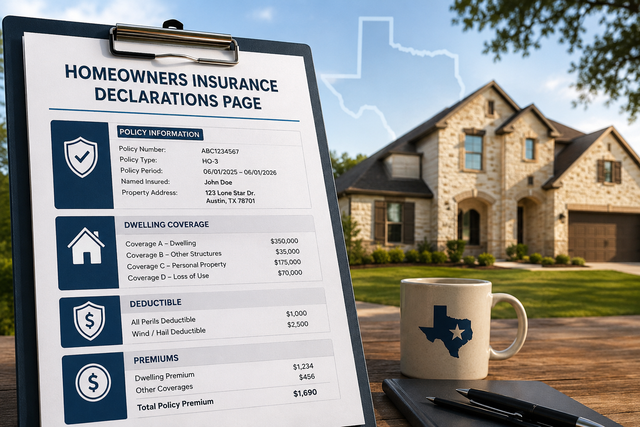
Knowing which structure your HOA uses is essential for determining what your individual policy needs to cover. Ask your HOA for a copy of the master policy declarations page — specifically the coverage scope — before assuming either structure.
What Your Individual Condo Policy (HO-6) Covers
An HO-6 policy is the individual condo insurance product designed to fill the gaps left by the master policy. Depending on your HOA's master policy structure, your HO-6 needs to cover different things.
Unit interior structure. If your HOA has a bare walls-in master policy, your HO-6 needs to cover the interior of your unit — walls, flooring, ceilings, fixtures, cabinets, appliances, and any improvements you've made. This is sometimes called walls-in coverage.
Personal property. Your furniture, electronics, clothing, and other personal belongings are not covered by the HOA master policy under any structure. Your HO-6 personal property coverage protects them.
Personal liability. If someone is injured inside your unit or you cause damage to another unit — a burst pipe in your unit that floods the unit below — personal liability coverage pays for the resulting claims. HOA master policies cover common areas; individual liability within your unit is your responsibility.
Loss assessment coverage. When a loss affecting the entire building or common areas exceeds the HOA master policy limits, the HOA can assess the shortfall to individual unit owners. Loss assessment coverage in your HO-6 pays your share of those assessments up to your policy limit. This is often overlooked and can be significant after a major event affecting the whole building.
Additional living expenses. If your unit is uninhabitable after a covered loss, ALE coverage pays for temporary housing during repairs.
The Master Policy Deductible Problem
Many Texas condo owners don't realize that HOA master policy deductibles have increased significantly in recent years — in some cases to $25,000, $50,000, or more for wind and hail events.
When the master policy deductible is triggered, it often falls on individual unit owners to cover their proportional share. An HOA master policy with a $50,000 wind/hail deductible in a 50-unit building means each unit owner may owe $1,000 per claim.
Loss assessment coverage in your HO-6 addresses this — but only up to your coverage limit, and only if your policy's loss assessment coverage applies to the type of deductible assessment your HOA uses. Review your specific HO-6 policy language and ask your agent whether your loss assessment coverage would respond to your HOA's master policy deductible assessments.
How Much Coverage to Carry
The coverage amount for the interior structure of your unit should reflect what it would cost to rebuild the interior to its current state. If you've made improvements — upgraded flooring, custom cabinetry, high-end appliances — those improvements need to be reflected in your coverage amount.
For personal property, the same considerations apply as in any homeowners policy — replacement cost versus actual cash value, high-value item sublimits, and the value of having a documented home inventory.
A Final Thought
Condo insurance in Texas requires understanding two policies — the HOA master and your individual HO-6 — and how they work together. Most condo owners rely on one without fully understanding the other.
Getting a copy of your HOA master policy's declarations page, understanding its coverage structure, and making sure your HO-6 fills the gaps that remain is the due diligence that prevents discovering a coverage gap at the moment you need coverage most.
For educational purposes only. Consult a licensed Texas insurance agent for guidance specific to your situation.
Find out exactly what you're missing.
The free 4-minute checkup identifies your gaps and matches you with a local independent advisor.
Free Coverage Review →