Home Insurance for Older Homes in Texas: What to Expect and How to Prepare
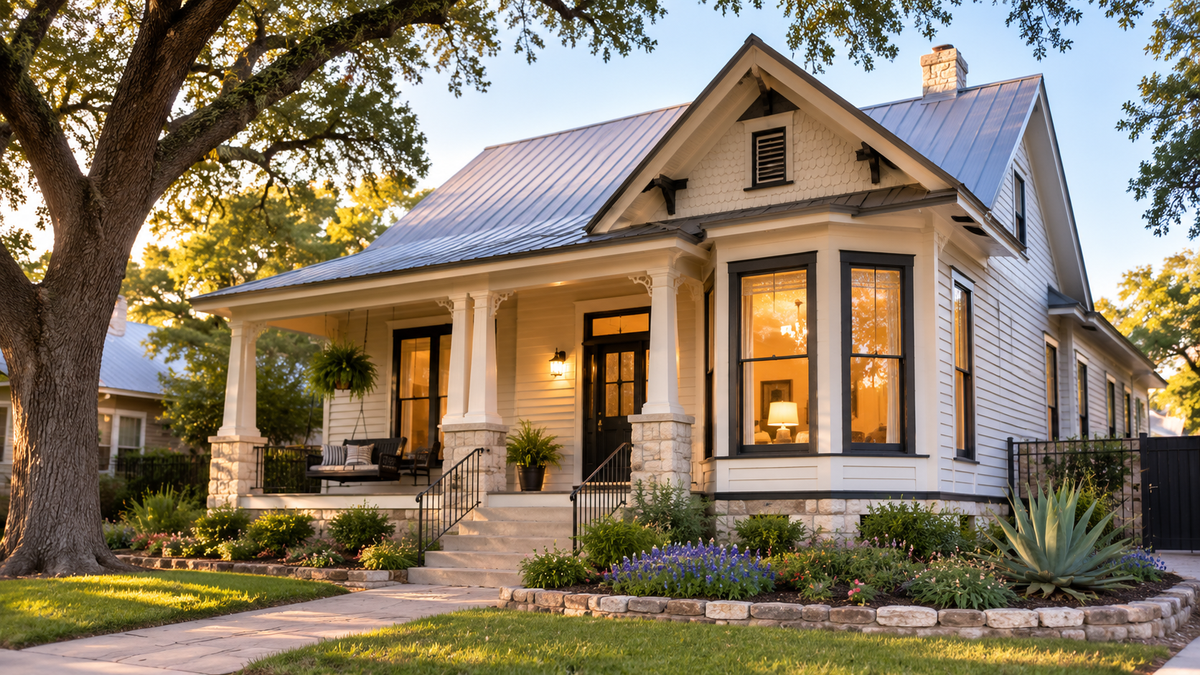
Texas has a significant stock of older homes — neighborhoods built in the 1950s, 1960s, 1970s, and 1980s that have aged into a risk profile that creates real insurance challenges.
A home that was straightforward to insure twenty years ago may now face tighter underwriting, higher premiums, coverage restrictions, or outright declinations from standard market carriers.
Understanding why this happens and what options exist helps owners of older Texas homes navigate the current market more effectively.
What Insurers Look At in Older Homes
Roof age and condition. This is the primary concern for most insurers evaluating older Texas homes. Roofs over 15 to 20 years old face tighter underwriting standards across most Texas carriers — higher premiums, ACV rather than replacement cost coverage for the roof, or declination. In a state with the highest hail claim frequency in the country, an aging roof represents known, quantifiable risk that insurers price accordingly.
Electrical systems. Homes built before the 1980s may have electrical systems that don't meet current standards — knob-and-tube wiring from the early to mid-20th century, aluminum wiring from the 1960s and early 1970s, or panels that have been recalled or identified as fire risks. These systems generate higher fire risk and are scrutinized in underwriting.
Plumbing materials. Older homes may have galvanized steel pipes that corrode and restrict flow over time, or polybutylene pipes installed widely in the 1970s and 1980s that are prone to failure. These materials generate higher water damage claim rates and affect underwriting.
Foundation type and condition. Texas soils — particularly the expansive clay soils common across much of the state — cause foundation movement that, over decades, creates structural issues in older homes. Cracked foundations, differential settlement, and related structural concerns affect insurability.
HVAC age and condition. Older HVAC systems that haven't been replaced present higher failure risk and in some cases fire risk, particularly older furnaces and air handlers.
What Happens at the Underwriting Stage
When you apply for homeowners insurance on an older Texas home, the insurer may:
Request a property inspection. Some carriers require a physical inspection of older homes before binding coverage. The inspector evaluates the conditions above and reports back to the underwriter.
Offer coverage with conditions. The insurer may offer coverage conditioned on specific improvements — replacing the roof within 30 to 90 days, updating the electrical panel, replacing polybutylene plumbing. Coverage binds, but must be updated or it cancels.
Offer coverage with restrictions. Coverage may be offered with specific exclusions — such as excluding roof claims, excluding water damage from plumbing, or covering the home on ACV rather than replacement cost terms.
Decline coverage. Standard market carriers may decline homes with conditions they're not willing to underwrite at any premium — significantly aged electrical systems, severely deteriorated roofs, or serious structural issues.
What You Can Do
Address the roof first. Roof replacement is the single most impactful improvement for older home insurability in Texas. A new roof restores full standard market access in most cases, removes ACV restrictions on roof coverage, and typically reduces premiums. For owners of older homes planning to remain long-term, a roof replacement resolves the most common underwriting concern.
Update electrical if it's flagged. Knob-and-tube wiring and aluminum branch circuit wiring are the electrical conditions most likely to cause carrier declinations. Updating these is expensive — but may be necessary to access standard market coverage and is a legitimate safety improvement independent of the insurance consideration.
Disclose fully and accurately. Attempting to obtain coverage without disclosing known conditions on an older home creates coverage dispute risk if those conditions contribute to a future claim. Accurate disclosure, while sometimes resulting in higher premiums or conditions, produces coverage that actually works when needed.
Work with an independent agent who knows the non-standard market. Standard market carriers have the tightest underwriting criteria for older homes. Non-standard and specialty carriers that specifically underwrite older homes, historic properties, and challenging risk profiles have more flexibility. An independent agent with access to these markets can find options that standard carriers won't write.
Ordinance or Law Coverage for Older Homes
For older Texas homes, ordinance or law coverage — which pays for code upgrades required when making repairs after a covered loss — is particularly important.
A home built in 1965 that sustains significant damage and requires substantial repairs must be rebuilt to current building code — not 1965 code.
The gap between those two standards can add tens of thousands of dollars to a repair project. Standard homeowners policies pay to rebuild what was there. Ordinance or law coverage pays for the required upgrades.
For older homes, the ordinance or law limit often needs to be higher than the standard 10% of dwelling coverage that many policies include by default. Ask your agent about increasing this limit.
For educational purposes only. Consult a licensed Texas insurance agent for guidance specific to your situation.
Find out exactly what you're missing.
The free 4-minute checkup identifies your gaps and matches you with a local independent advisor.
Free Coverage Review →