How to Determine the Age of Your Roof for Insurance Purposes

When you apply for homeowners insurance in Texas, one of the first questions you'll encounter is about your roof. How old is it? What material is it? Has it been replaced or repaired recently?
For many homeowners — particularly those who bought an existing home rather than building new — the honest answer is: I'm not entirely sure.
That uncertainty is more common than most people realize, and it's worth resolving before an insurer does it for you. Here's how to determine your roof's age accurately — and why the answer matters more in Texas than most other states.
What Your Roof's Age Has to Do With Your Insurance
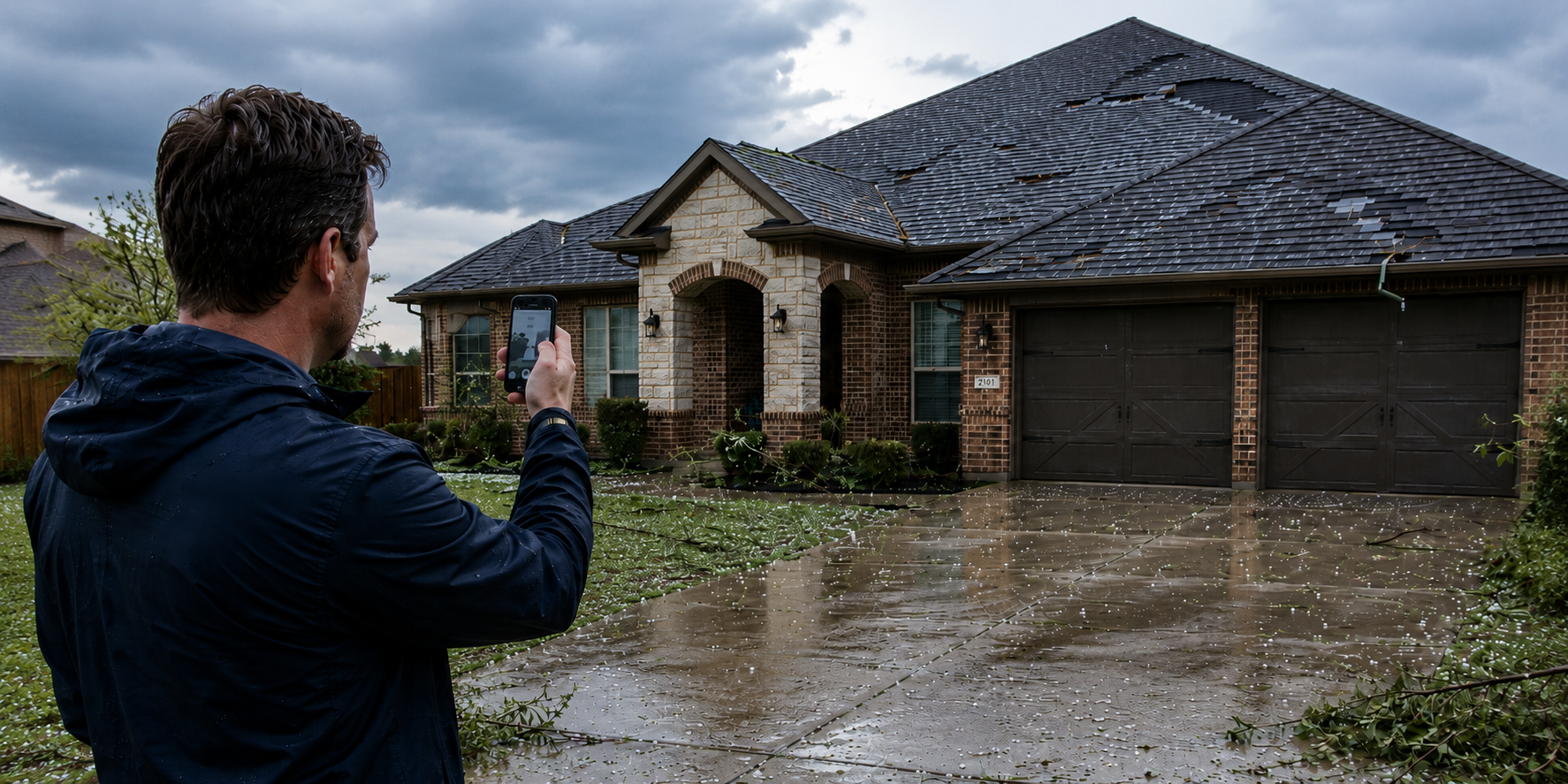
Texas leads the nation in hail damage claims. Roofing claims represent a significant share of total homeowners losses across the state — and insurers have responded by making roof age one of the most influential underwriting factors in the Texas market.
A roof's age affects your premium, your coverage terms, and in some cases your ability to obtain coverage at all. Many Texas carriers will not write new policies on homes with roofs over 15 to 20 years old. Others shift from replacement cost to actual cash value coverage for aging roofs — meaning depreciation is applied at claim time rather than paying the full replacement cost.
Knowing your roof's age accurately isn't just an administrative detail. It determines what coverage is available to you and what you'll pay for it.
Method 1: Your Home Purchase Documents
If you purchased your home rather than building it, your closing documents are the first place to look.
The home inspection report. A professional home inspection conducted at the time of purchase typically includes an assessment of the roof — its condition, estimated remaining useful life, and sometimes an estimated installation date or age. This is often the most accessible starting point for homeowners who don't know their roof's history.
Seller's disclosure. Texas requires sellers to complete a disclosure form that includes information about the property's condition. The seller's disclosure may indicate whether the roof was replaced during the seller's ownership and approximately when.
The appraisal report. The property appraisal conducted for mortgage purposes sometimes includes roof condition information, though the level of detail varies.
These documents won't always give you a precise installation date — particularly if the roof predates the current or previous owner's tenure — but they provide a starting point and sometimes a definitive answer.
Method 2: Permit Records
Roof replacements in Texas typically require a building permit from the local municipality. Those permits are public records and often include the date the work was completed.
How to access permit records. Contact your city or county's building department — in most Texas municipalities, this is accessible online through the city's permit portal. Search by your property address for any permits pulled for roofing work. The permit record typically shows the date the permit was issued and the date of final inspection.
What to look for. A roofing permit with a final inspection date gives you a reliable installation date for the most recent roof replacement. If multiple permits appear for your address, the most recent roofing permit is what matters for insurance purposes.
Limitations. Not all roofing work is permitted — some contractors pull permits consistently, others don't. If no roofing permit appears for your property, it doesn't definitively mean the roof hasn't been replaced. It may mean the work was done without a permit, which is common in some Texas markets.
Method 3: Ask the Previous Owner
If you purchased your home recently and the roof history is unclear from documents, the previous owner may know.
This is more useful in transactions where you have an ongoing relationship with the seller — less practical for purchased foreclosures, estate sales, or situations where contact with the prior owner isn't possible.
If you're still within a period where you can reach the seller or their agent, a direct question about the roof's history often produces useful information — including contractor names, approximate dates, and whether any insurance claims were involved in a previous replacement.
Method 4: Professional Roof Inspection
When documentation doesn't provide a clear answer, a professional roof inspection is the most reliable way to establish your roof's age and condition.
What an inspector looks for. An experienced roofing contractor can estimate a roof's age based on several observable characteristics — the condition and wear pattern of shingles, granule loss on asphalt shingles, the appearance of flashing and sealants, the condition of underlayment where visible, and any evidence of previous repairs or layering.
Granule loss as an age indicator. Asphalt shingles lose granules over time through weathering and hail exposure. The pattern and degree of granule loss is one of the most reliable visible indicators of a roof's age. A roof with significant granule loss — visible in gutters and downspout discharge — is showing its age in ways an inspector can assess.
Multiple layers. Texas building codes limit the number of shingle layers allowed before a full tear-off and replacement is required. An inspector can identify whether your roof has one layer or multiple layers — which affects both the age assessment and the insurer's evaluation of the roof.
Documentation. Ask the inspector to provide a written report with their assessment of the roof's age, condition, and estimated remaining useful life. This documentation is useful both for your own information and for presenting to insurers.
The cost of a professional roof inspection in Texas typically runs $150 to $300 — a modest investment relative to the coverage implications of knowing your roof's accurate age.
Method 5: Satellite Imagery and Property Data Services
Several property data services aggregate information about homes — including roof characteristics — from satellite imagery, permit records, and other public data sources.
What these services offer. Some property data platforms used by insurers and real estate professionals include roof age estimates derived from satellite imagery analysis and permit records. These estimates are not always accurate but can provide a useful reference point when other sources are unavailable.
How to access. Some of this data is available through public property record portals at the county level. Real estate platforms sometimes include roof age information derived from permit records. Your insurance agent may also have access to property data tools that pull this information.
Accuracy limitations. Satellite-derived roof age estimates are approximations. They can be affected by image quality, the frequency of satellite imagery updates, and the accuracy of underlying permit data. Use them as a reference point rather than a definitive answer.
Method 6: Receipts and Records From the Seller or Your Own Ownership
If the roof was replaced during your own ownership of the property, your records should include the contractor invoice, permit documentation, and warranty paperwork.
If you inherited records from a previous owner at closing — some sellers provide home maintenance records as part of the transaction — these may include roofing receipts or warranty documents with installation dates.
Manufacturer warranties on roofing materials are tied to installation dates and sometimes registered with the manufacturer. If you have a warranty document, it typically includes the installation date and the contractor who performed the work.
What Insurers Actually Use
When you apply for homeowners insurance or renew a policy, insurers use a combination of what you report and what their own data sources show.
Many Texas carriers use third-party property data services that pull roof age estimates from satellite imagery and permit records. These estimates may or may not match what you report — and discrepancies can trigger additional questions or an inspection request.
If your self-reported roof age differs significantly from what an insurer's data shows, they may request documentation to verify. Having accurate documentation ready — inspection reports, permit records, contractor invoices — resolves discrepancies quickly and favorably.
What to Do With the Information
Once you have an accurate assessment of your roof's age, a few practical steps follow.
Know how your current carrier treats your roof's age. Ask your agent directly: given my roof's age, is my roof covered on a replacement cost or actual cash value basis? Are there any underwriting concerns about the roof at renewal? Getting this information proactively is better than discovering it on a renewal notice.
If your roof is approaching the threshold. Most Texas carriers begin tightening terms or considering non-renewal on roofs approaching 15 to 20 years. If your roof is in this range, getting a professional inspection now — before an insurer flags the issue — gives you accurate documentation and potentially supports better coverage terms.
If your roof is over the threshold. An older roof doesn't automatically mean you're uninsurable. It means your options in the standard market narrow. Non-standard and specialty carriers exist for homes with older roofs. Working with an independent agent who knows the Texas market identifies what's available.
If replacement is on the horizon. A new roof resets your insurance situation substantially — typically lowering premiums, restoring replacement cost coverage, and reopening the full standard market. If your roof is approaching end of life, understanding the insurance implications of timing the replacement is worth factoring into your decision.
A Final Thought
Roof age is one of the most consequential pieces of information in the Texas homeowners insurance conversation — and one that many homeowners don't know accurately. The effort to find out is modest. The value of knowing before an insurer finds out differently is significant.
Start with your purchase documents. Pull permit records if they're available. Get a professional inspection if the answer remains unclear. And once you know, make sure your coverage terms reflect the accurate picture.
For educational purposes only. Coverage terms and availability vary by insurer and individual circumstances. Consult a licensed Texas insurance agent for guidance specific to your situation.
Find out exactly what you're missing.
The free 4-minute checkup identifies your gaps and matches you with a local independent advisor.
Free Coverage Review →