Swimming Pools, Teen Drivers, and Dog Bites: The Liability Risks Most Texas Homeowners Underestimate
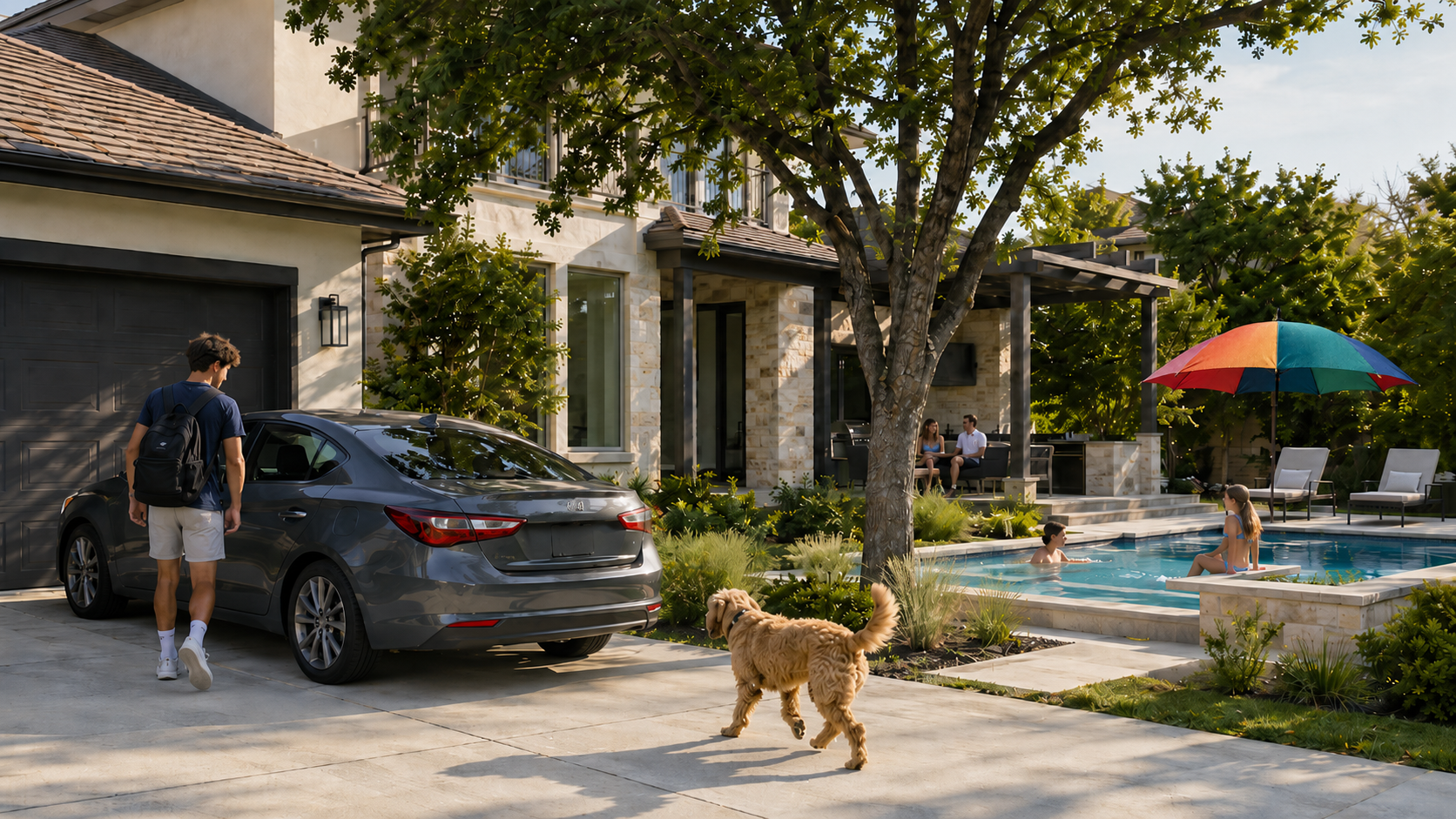
There are three things that show up repeatedly in personal liability claims against Texas homeowners. Not because the people involved were careless or irresponsible. But because swimming pools, teenage drivers, and dogs are a normal part of family life in Texas — and the liability exposure they carry is significantly larger than most homeowners realize.
Understanding that exposure doesn't mean getting rid of the pool or rehoming the dog. It means knowing what you're actually carrying and making sure your coverage reflects it.
Swimming Pools
Texas has one of the highest rates of residential pool ownership in the country. In suburban neighborhoods across Houston, Dallas, Austin, and San Antonio, a backyard pool is less a luxury than a standard feature. For families with children, it's often a central part of summer life.
It's also one of the most significant sources of personal liability exposure a homeowner can have.
The attractive nuisance doctrine. Under Texas law, a swimming pool is considered an attractive nuisance — a feature that is inherently appealing to children and therefore creates a heightened duty of care for the property owner. This means you can be held liable for injuries to children who access your pool without your permission. A neighbor's child who climbs your fence and drowns in your pool while you're away can generate a claim against you — even though you didn't invite them and weren't home.
The legal standard isn't whether you were negligent in the traditional sense. It's whether you took reasonable steps to prevent foreseeable access by children — adequate fencing, self-latching gates, pool alarms, safety covers. Texas has specific fencing requirements for residential pools, and failing to meet them removes meaningful legal protection.
Invited guests. The more common scenario is an injury to someone you did invite. A guest who slips on wet pool decking, dives into shallow water, or is injured on a slide or diving board can bring a claim against you for medical expenses, lost wages, and pain and suffering. Serious pool injuries — spinal injuries from diving accidents, near-drownings with lasting neurological effects, traumatic falls — generate claims that routinely exceed standard homeowners liability limits.
A typical homeowners policy carries $100,000 to $300,000 in personal liability coverage. A serious pool injury involving permanent disability can generate a claim several times that amount.
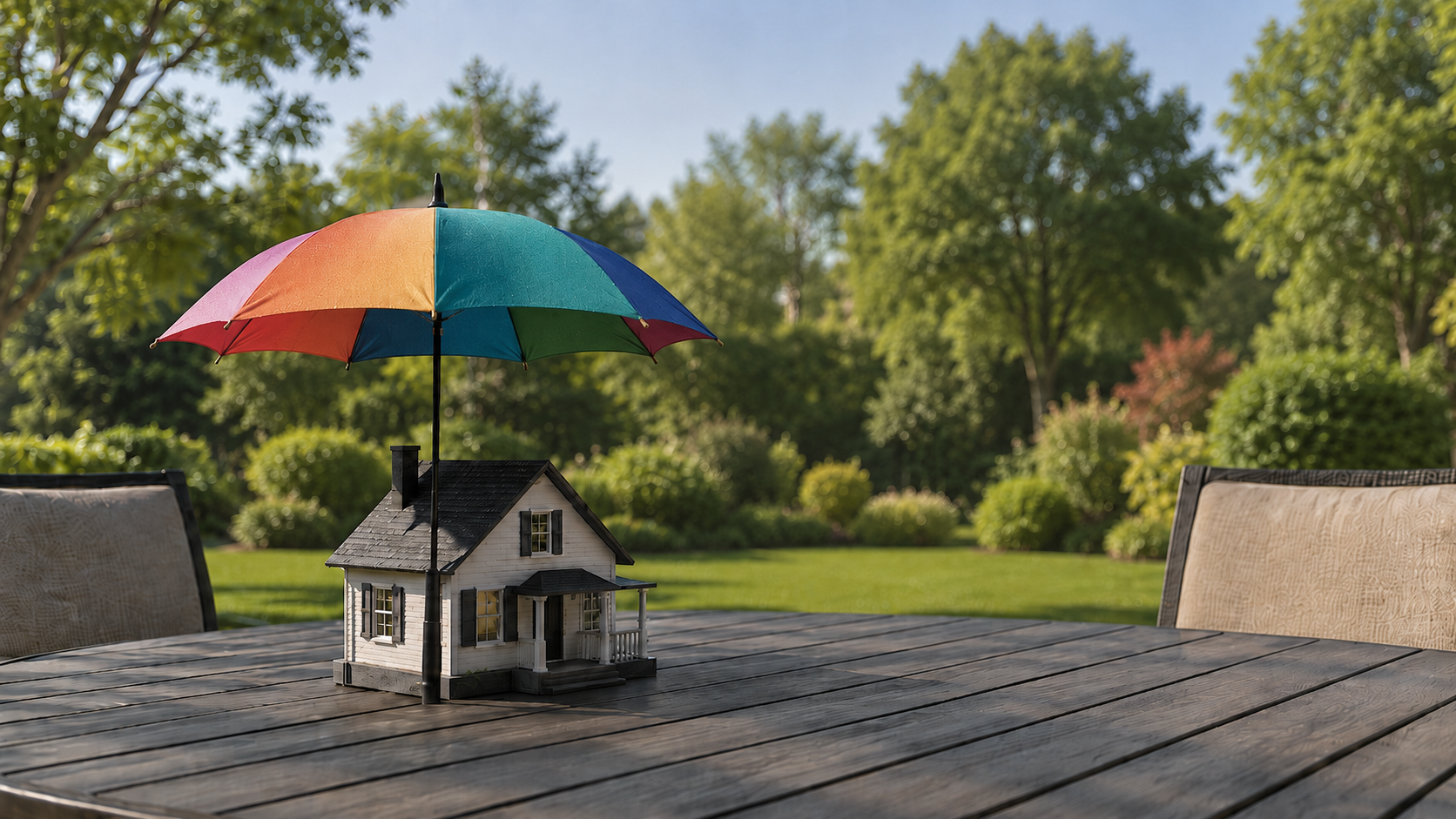
What to do about it. Meet or exceed Texas pool fencing requirements. Maintain safety equipment and ensure it's functional. Review your homeowners liability limit and consider whether it's adequate given the exposure a pool creates. An umbrella policy is particularly valuable for pool-owning households — it adds $1 million or more in liability coverage above your homeowners limit at a modest incremental cost.
Teen Drivers
The statistics on teen drivers are not subtle. Drivers aged 16 to 19 are nearly three times more likely to be involved in a fatal crash than drivers aged 20 and older, according to federal highway safety data. In Texas — with its high-speed highways, heavy truck traffic, and long driving distances — the consequences of a serious teen driver accident can be catastrophic.
From a liability standpoint, the relevant fact is this: when a teen driver in your household causes an accident, the claim runs through your auto policy. Your insurer pays up to your liability limits.
When those limits are exceeded — and in serious accidents involving significant injuries, they can be — the excess is your personal financial responsibility.
The parental liability exposure. Texas law holds parents liable for the negligent acts of their minor children in certain circumstances. If you signed your teenager's driver's license application — which Texas requires a parent or guardian to do for drivers under 18 — you have accepted legal responsibility for their driving. A serious accident caused by your teen driver exposes your personal assets, not just your auto policy limits.
The gap most families don't see. Many Texas families add a teen driver to their auto policy, absorb the premium increase, and consider the matter handled. What they often don't examine is whether their liability limits are adequate for the elevated risk a teen driver introduces. A 16-year-old who causes a multi-vehicle accident on a Texas highway can generate liability exposure that a $100,000 per person limit doesn't begin to address.
The graduated license period. Texas uses a graduated driver's license system that restricts new drivers during their first year. Nighttime driving restrictions, passenger limits, and phone prohibitions are designed to reduce accident risk during the highest-risk period. Violations of these restrictions — if they contribute to an accident — can affect how liability is assessed and how insurers respond to claims.
What to do about it. Review your auto liability limits when a teen driver joins your household. This is one of the clearest cases where moving from state minimum coverage to higher limits makes direct financial sense. An umbrella policy that extends above those limits is worth strong consideration for any household with a licensed teen driver. The incremental umbrella premium for a teen driver household is higher than for an adult-only household — but it's still modest relative to the exposure it covers.
Dog Bites
Texas has one of the largest dog-owning populations in the country. Dogs are part of the household in millions of Texas families. They're also the source of a significant and frequently underestimated source of personal liability claims.
The Insurance Information Institute consistently ranks dog bites among the top causes of homeowners liability claims nationally — both in frequency and in average claim cost. Average dog bite claim settlements have risen sharply in recent years, driven by increasing medical costs and larger jury awards.
Texas's one-bite rule — and its limits. Texas follows what's commonly called the one-bite rule. In its basic form, this means a dog owner can be held strictly liable for a bite if they knew or should have known the dog had aggressive tendencies — typically established by a prior bite or documented aggressive behavior.
But the one-bite rule is frequently misunderstood as a free pass for first offenses. It isn't. Texas law also allows negligence claims against dog owners regardless of prior bite history. If you failed to exercise reasonable care in controlling your dog — failing to leash it in a public area, leaving a gate unlatched, allowing a known jumper near small children — you can be held liable for a first bite on negligence grounds.
The severity factor. Dog bite claims vary enormously in severity. A minor bite requiring minimal medical attention generates a modest claim. A serious bite involving facial injuries, nerve damage, scarring, or injuries to a child can generate a claim worth hundreds of thousands of dollars — particularly when plastic surgery, psychological treatment, and long-term effects are factored in.
Children are disproportionately represented in serious dog bite claims. A bite that causes permanent facial scarring to a child generates a very different claim than the same bite to an adult. In Texas courtrooms, jury sympathy for child victims in dog bite cases has produced substantial verdicts.
Breed considerations. Some Texas homeowners insurers exclude coverage for certain dog breeds considered higher risk — commonly including pit bulls, Rottweilers, German shepherds, Dobermans, and others depending on the carrier. If you own one of these breeds, it's worth confirming explicitly whether your homeowners policy covers dog bite liability or excludes it. An exclusion you didn't know about is an exclusion that won't help you when you need it.
What to do about it. Confirm whether your homeowners policy covers dog bite liability and whether your specific breed is excluded. If it is, ask about endorsements or separate policies that restore that coverage. Review your liability limits relative to the realistic cost of a serious dog bite claim. And as with pools and teen drivers, umbrella coverage provides a meaningful additional layer of protection above homeowners limits.
The Common Thread
Swimming pools, teen drivers, and dogs don't make you a reckless homeowner. They make you a normal Texas family. The liability exposure they carry isn't a reason to avoid them — it's a reason to make sure your coverage actually reflects the life you're living.
The pattern across all three is the same. A standard homeowners or auto policy provides a baseline of liability coverage that handles most situations adequately. The situations it doesn't handle adequately tend to be serious — significant injuries, lasting consequences, claims that reach into seven figures in the worst cases.
Those situations are low probability. But low probability is not zero probability. And in Texas, where the legal environment is active and jury verdicts in personal injury cases can be substantial, the gap between your policy limit and a serious judgment can be very large very quickly.
The two-part answer for most Texas families with one or more of these exposures is the same: review your underlying liability limits to make sure they reflect your actual risk profile, and seriously consider umbrella coverage to extend protection above those limits.
At $150 to $400 per year for most households, umbrella insurance is the most cost-efficient way to close a gap that, for families with pools, teen drivers, or dogs, is more real than many people want to sit with.
For educational purposes only. Coverage terms, availability, and pricing vary by insurer and individual circumstances. Consult a licensed Texas insurance agent for guidance specific to your situation.
Find out exactly what you're missing.
The free 4-minute checkup identifies your gaps and matches you with a local independent advisor.
Free Coverage Review →